Type 2 diabetes has become one of the most prevalent chronic health conditions worldwide — and India is
among the most affected nations. Beyond managing blood sugar levels, diabetes has far-reaching effects
on the heart, kidneys, nerves, eyes, and overall quality of life. Many patients feel overwhelmed by lifelong
medication dependency and the risk of complications.
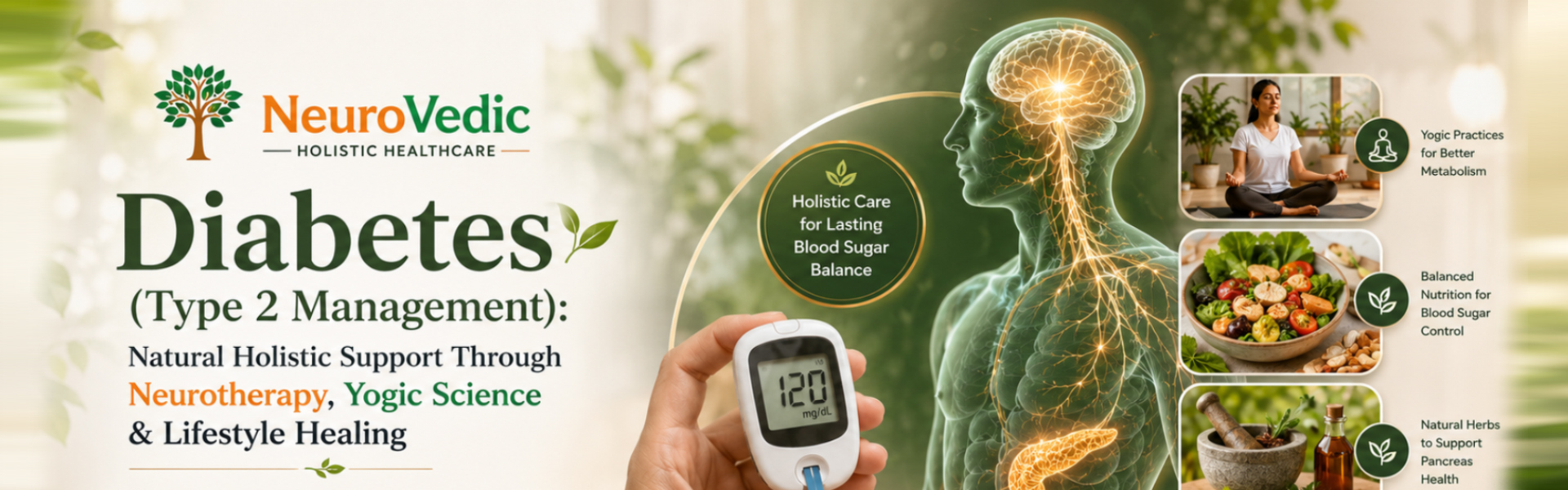
At Neuro Vedic Holistic Health Care, we believe that blood sugar can be significantly influenced by
lifestyle, diet, stress management, and nervous system health. Through Neurotherapy, Yogic Science,
Nutritional Guidance, and Lifestyle Modification, we aim to support patients in achieving better metabolic
health naturally alongside medical management.
Can This Condition Improve Naturally?
Type 2 diabetes is largely a lifestyle and metabolic condition — meaning it is significantly influenced by
what we eat, how we move, how we sleep, and how we manage stress. The body’s insulin sensitivity can
improve with the right interventions. Many patients have achieved remarkable improvements in blood
sugar control through consistent lifestyle changes, and holistic care provides a structured, supportive
framework for making those changes.
Understanding This Condition
Type 2 diabetes is a chronic metabolic disorder characterized by high blood glucose levels resulting from
insulin resistance — a condition where cells fail to respond effectively to insulin. Over time, the pancreas
may also reduce insulin production. Unlike Type 1 (autoimmune), Type 2 is strongly associated with
lifestyle factors. India has over 77 million people with diabetes, making it the second-highest globally.
Complications include neuropathy, nephropathy, retinopathy, and cardiovascular disease.
• Autoimmune conditions (Hashimoto’s, Graves’ disease) • Iodine deficiency or excess • Selenium deficiency • Chronic stress affecting HPT axis • Gut dysbiosis and leaky gut (autoimmune connection) • Heavy metal exposure • Hormonal fluctuations (pregnancy, menopause) • Radiation exposure • Certain medications • Nutritional deficiencies: Vitamin D, zinc, selenium
Modern Medical Treatment Approaches
Hypothyroidism is primarily treated with levothyroxine (synthetic T4). Hyperthyroidism may be managed
with anti-thyroid medications, radioactive iodine therapy, or surgery. Regular TSH, T3, and T4 monitoring
is essential. For autoimmune thyroid disease, some integrative approaches also focus on gut health,
anti-inflammatory nutrition, and stress reduction.
Understanding Long-Term Medication Considerations
• Incorrect levothyroxine dose may cause palpitations or osteoporosis • Anti-thyroid drugs may affect liver and white blood cells • Radioactive iodine often leads to permanent hypothyroidism • Long-term monitoring and dose adjustment required
How Neurotherapy May Support This Condition
Neurotherapy at Neuro Vedic may support women with PCOS by: reducing stress hormones that worsen
insulin resistance and androgen excess, improving blood circulation to the reproductive and endocrine
organs, supporting nervous system balance for better hormonal regulation, reducing pain and discomfort,
and supporting overall metabolic wellness. Regular sessions may be part of a comprehensive hormonal
rebalancing program.
Role of Yogic Science
• Bhujangasana (Cobra pose) for reproductive organ stimulation • Baddha Konasana (Butterfly pose) for pelvic health • Setu Bandhasana (Bridge pose) for hormonal balance • Supta Baddha Konasana for deep pelvic relaxation • Pranayama for cortisol and stress management • Meditation for emotional wellbeing and hormonal balance • Surya Namaskar for weight and insulin management
Diet & Nutrition Support
• Low glycemic index diet: oats, lentils, vegetables, berries • Anti-inflammatory foods: turmeric, ginger, leafy greens • Inositol-rich foods: citrus fruits, brown rice, beans • Spearmint tea: may reduce androgen levels • Chromium: broccoli, green beans • Vitamin D: sunlight, fortified foods, eggs • Avoid: refined carbohydrates, excess dairy, sugary foods, trans fats • Increase fiber for gut health and estrogen metabolism
Lifestyle Modifications for Better Health
• Regular moderate exercise — especially strength training and yoga • Weight management (even 5-10% weight loss significantly improves PCOS) • Consistent sleep patterns • Stress reduction — chronic stress worsens hormonal imbalance • Limit environmental toxin exposure (plastics, pesticides) • Regular medical monitoring and hormonal assessment • Support for mental health — PCOS has significant emotional impact • Meal timing: avoid skipping meals
Why Choose Neuro Vedic Holistic Health Care?
At Neuro Vedic Holistic Health Care, we follow an integrated wellness approach that combines
Neurotherapy, Yogic Science, Diet & Nutrition Guidance, and Lifestyle Modification. Our focus is to
support the body naturally and help individuals improve overall health through holistic care principles —
addressing root causes rather than just suppressing symptoms.
• Personalized holistic care plans for each patient • Combination of Neurotherapy + Yogic Science + Nutrition + Lifestyle Guidance • Non-invasive, natural wellness support • Focus on root causes and long-term wellbeing • Compassionate, patient-centered approach
Frequently Asked Questions (FAQs)
Q1. What are the main signs of thyroid problems?
Hypothyroidism causes fatigue, weight gain, cold sensitivity, and depression. Hyperthyroidism causes
weight loss, anxiety, palpitations, and heat intolerance. A blood test can diagnose thyroid disorder.
Q2. Can thyroid disorders be managed naturally?
While most thyroid conditions require medical treatment, holistic care including nutrition, stress
management, yoga, and gut health support can significantly improve symptoms and overall wellbeing.
Q3. How does stress affect the thyroid?
Chronic stress disrupts the HPT axis, reducing thyroid hormone conversion and worsening thyroid
function — making stress management a key part of thyroid care.
Q4. What nutrients are important for thyroid health?
Iodine, selenium, zinc, Vitamin D, and magnesium are all essential for optimal thyroid function.
Deficiencies are common and correctable.
Q5. Can yoga help with thyroid disorders?
Specific yoga poses and pranayama may support thyroid stimulation and stress reduction. Poses like
Sarvangasana and Matsyasana are traditionally associated with thyroid support.
Q6. How does Neurotherapy support thyroid health?
Neurotherapy may help reduce stress, support hormonal balance through nervous system regulation,
improve circulation, and support overall endocrine system wellness.