

Holistic Healing at Neuro Vedic
Waking up unable to reach your arm above your head. Struggling to put on a shirt or reach the back seat of your car. Frozen shoulder — medically known as adhesive capsulitis — is a painful, debilitating condition that can profoundly restrict daily life for months or even years.
At Neuro Vedic Holistic Health Care, we support frozen shoulder recovery through Neurotherapy for pain relief and nerve support, Yogic Science for gentle shoulder mobilization, Nutritional Guidance for inflammation reduction, and Lifestyle Modification to address contributing factors.
Can This Condition Improve Naturally?
Frozen shoulder tends to be self-limiting — meaning it does resolve, though this can take 1-3 years without treatment. The good news is that consistent holistic care and appropriate movement therapy can significantly accelerate recovery, reduce pain during the process, and restore mobility more quickly. The body wants to move — it just needs support to overcome the cycle of pain and immobility.
Understanding This Condition
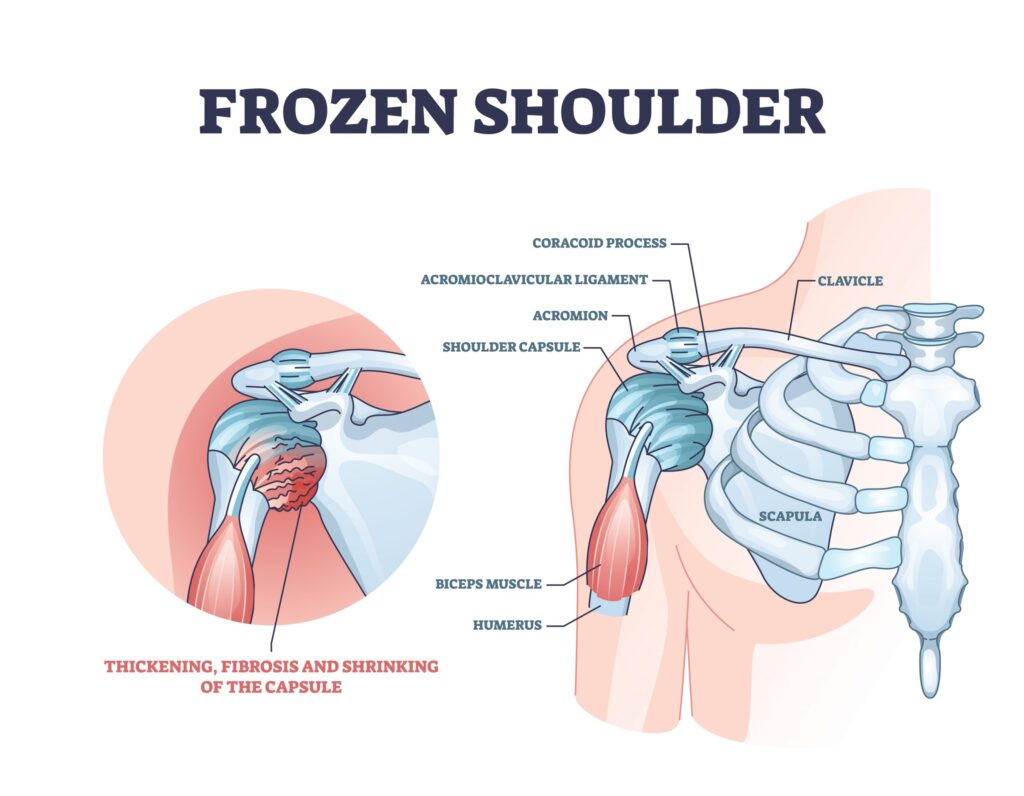
Frozen shoulder is a condition characterized by stiffness, pain, and progressive limitation of shoulder movement due to inflammation and thickening of the shoulder joint capsule. It typically develops in three stages: Freezing (pain increases and mobility decreases), Frozen (pain may reduce but stiffness remains), and Thawing (mobility gradually returns). It is more common in people aged 40-60, more frequent in women, and strongly associated with diabetes, thyroid disorders, and previous shoulder injury.
Common Symptoms
• Dull, aching shoulder pain
• Pain that worsens at night
• Progressive limitation of shoulder movement in all directions
• Inability to raise arm overhead
• Difficulty reaching behind the back
• Pain with any shoulder movement
• Muscle weakness in the shoulder
• Difficulty with dressing, hygiene, and daily tasks
• Pain radiating to the upper arm
• Stiffness that persists even at rest
Causes & Contributing Factors
• Prolonged shoulder immobility (after injury or surgery)
• Diabetes (significantly increases risk)
• Thyroid disorders
• Rotator cuff injury
• Autoimmune inflammatory response
• Previous shoulder surgery
• Hormonal changes
• Chronic poor posture
• Sedentary lifestyle and reduced shoulder use
• Stress and nervous system involvement
Modern Medical Treatment Approaches
Treatment includes physiotherapy (the most important intervention), NSAIDs for pain management, corticosteroid injections for inflammation, hydrodilatation (injection to expand joint capsule), and in resistant cases, manipulation under anesthesia or arthroscopic capsular release surgery.
Understanding Long-Term Medication Considerations
• Repeated steroid injections weaken joint tissues
• NSAIDs cause gastric and kidney concerns with long-term use
• Manipulation under anesthesia carries risks of further injury
• Surgery may not always provide complete relief
How Neurotherapy May Support This Condition
Neurotherapy at Neuro Vedic may support frozen shoulder recovery by: improving blood circulation to the inflamed joint capsule, reducing nerve pain signaling, relaxing surrounding shoulder musculature, reducing the pain-spasm-immobility cycle, supporting gradual range of motion improvement, and addressing stress-related nervous system involvement. Sessions are designed to complement physiotherapy and support natural healing.
Role of Yogic Science
• Pendulum exercises for joint decompression
• Gentle shoulder circles within pain-free range
• Wall-climbing finger exercises for gradual mobility
• Supported warrior pose with gentle shoulder opening
• Pranayama for pain management and relaxation
• Yoga Nidra for sleep improvement (pain often disrupts sleep)
• Always work within pain-free range — never force movement
Diet & Nutrition Support
• Anti-inflammatory: omega-3 fats, turmeric, ginger
• Vitamin D and calcium for joint tissue support
• Collagen-supporting: Vitamin C, bone broth
• Magnesium for muscle relaxation
• Blood sugar management for diabetic patients (key risk factor)
• Adequate hydration
• Avoid: pro-inflammatory foods, excess sugar, processed food
Lifestyle Modifications for Better Health
• Consistent, gentle daily shoulder mobilization
• Heat therapy before exercises for tissue warming
• Cold therapy after exercises for inflammation reduction
• Ergonomic sleeping position to reduce night pain
• Manage underlying conditions (diabetes, thyroid)
• Avoid complete immobility — gentle movement is essential
• Stress management — stress can worsen pain perception
• Regular physiotherapy is the cornerstone of recovery
Why Choose Neuro Vedic Holistic Health Care?
At Neuro Vedic Holistic Health Care, we follow an integrated wellness approach that combines Neurotherapy, Yogic Science, Diet & Nutrition Guidance, and Lifestyle Modification. Our focus is to support the body naturally and help individuals improve overall health through holistic care principles — addressing root causes rather than just suppressing symptoms.
• Personalized holistic care plans for each patient
• Combination of Neurotherapy + Yogic Science + Nutrition + Lifestyle Guidance
• Non-invasive, natural wellness support
• Focus on root causes and long-term wellbeing
• Compassionate, patient-centered approach
Frequently Asked Questions (FAQs)
Q1. How long does frozen shoulder last?
Without treatment, frozen shoulder can last 1-3 years. With consistent physiotherapy and holistic care, recovery can be significantly accelerated.
Q2. What is the main cause of frozen shoulder?
Prolonged immobility after injury, surgery, or due to pain, combined with diabetes or thyroid disorders, significantly increases the risk. Autoimmune inflammation of the joint capsule is the mechanism.
Q3. Can Neurotherapy help frozen shoulder?
Neurotherapy may help reduce pain, relax surrounding muscles, improve joint circulation, and support the natural recovery process alongside physiotherapy.
Q4. What exercises help frozen shoulder?
Pendulum exercises, wall-climbing finger exercises, gentle shoulder circles, and physiotherapy-directed range of motion exercises are most beneficial.
Q5. Is yoga safe for frozen shoulder?
Gentle yoga within a pain-free range can be helpful. Always avoid forcing movement. Pranayama and Yoga Nidra help with pain management and sleep.
Q6. Does diet affect frozen shoulder?
Anti-inflammatory nutrition, blood sugar management, and adequate Vitamin D and Calcium can support tissue healing and reduce inflammation during recovery.