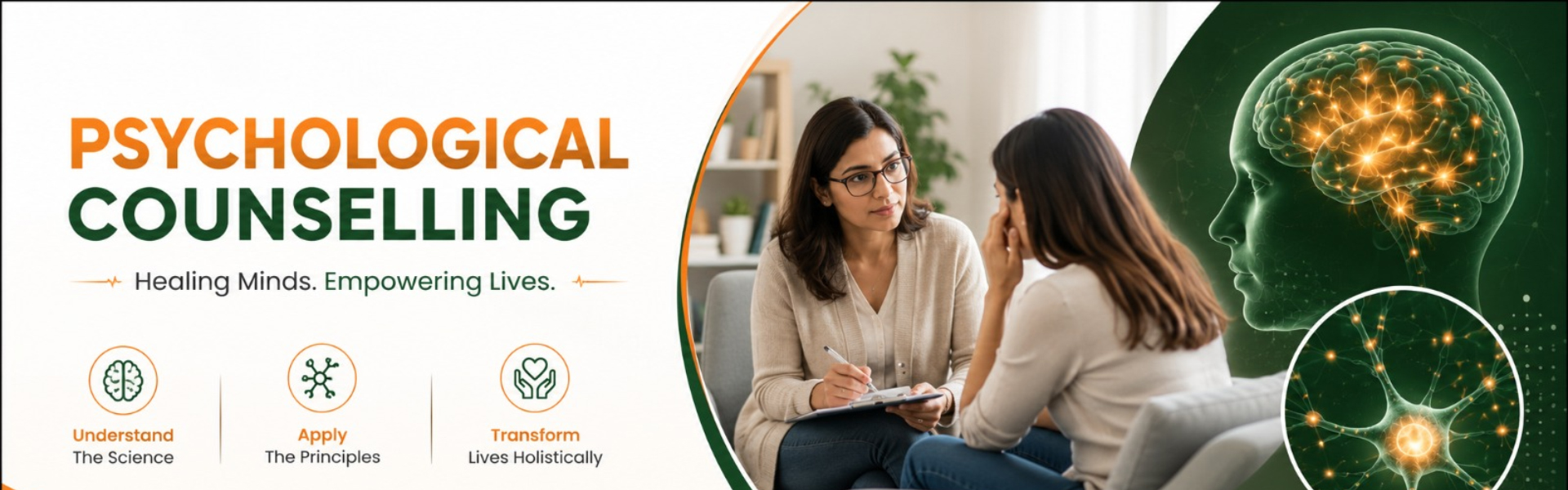

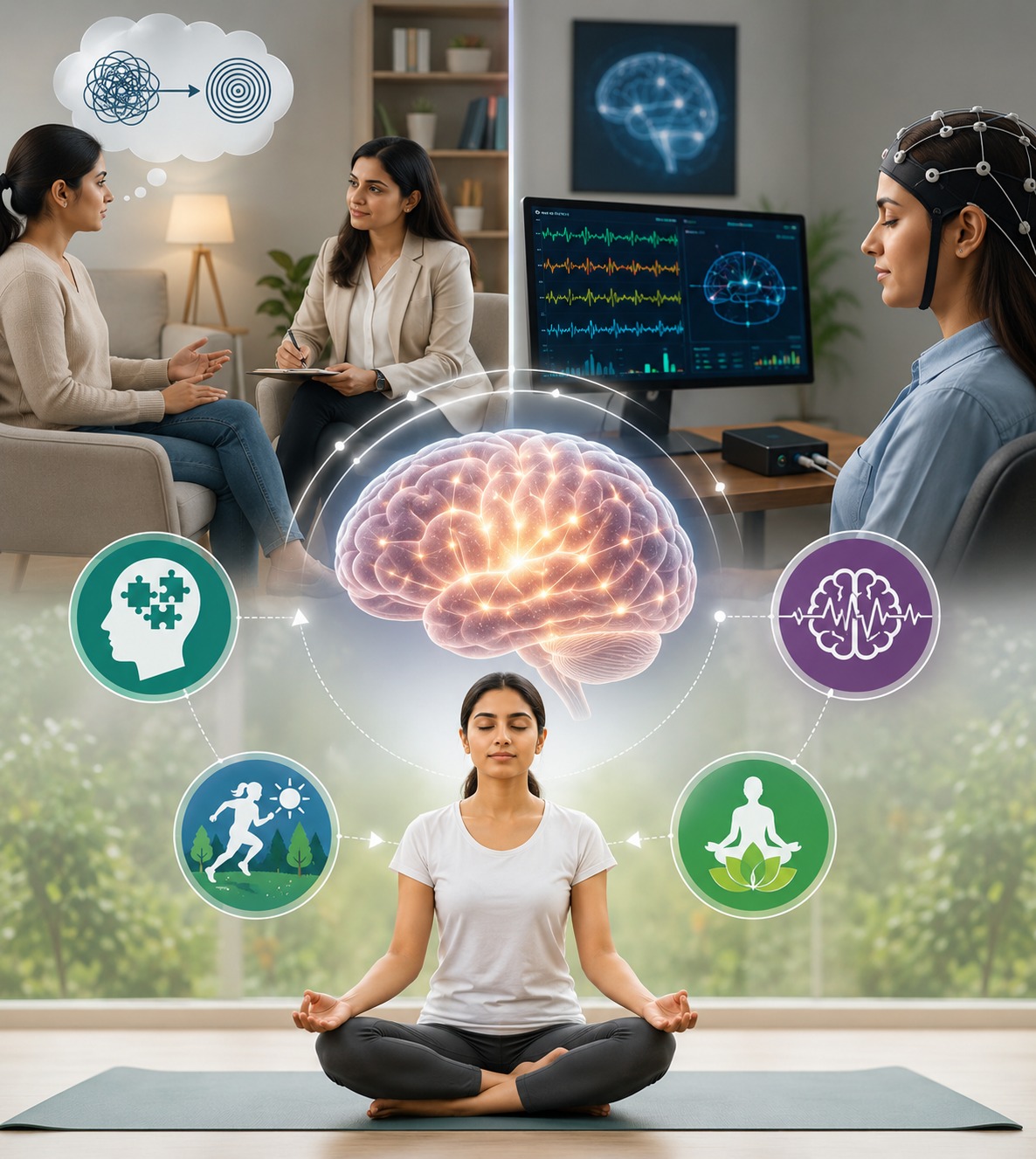
Integrating psychological counselling models with Indian neurotherapy treatments offers a comprehensive approach to mental health care, leveraging the strengths of both methodologies to address a wide range of psychological and neurological issues. Psychological counselling models can significantly enhance the effectiveness of neurotherapy, especially within the cultural context of India. Here’s how various psychological counselling models can be effectively integrated with neurotherapy treatments:
Psychological Counselling treatments:
INTEGRATION STRATIGIES:
Cognitive Restructuring and Neurofeedback: Cognitive restructuring techniques in CBT are used alongside neurofeedback to help clients identify and change negative thought patterns while simultaneously training their brain to achieve healthier neurological patterns.
Behavioral Activation: Encouraging clients to engage in positive activities can enhance neuroplasticity, making neurotherapy more effective.
BENEFITS:
Enhanced Brain Function: Combining CBT with neurotherapy can improve cognitive functions such as attention, memory and executive function.
Comprehensive Treatment: Addressing both cognitive and neurological aspects of disorders such as anxiety, depression and PTSD provides a ore holistic treatment approach.
INTEGRATION STRATEGIES:
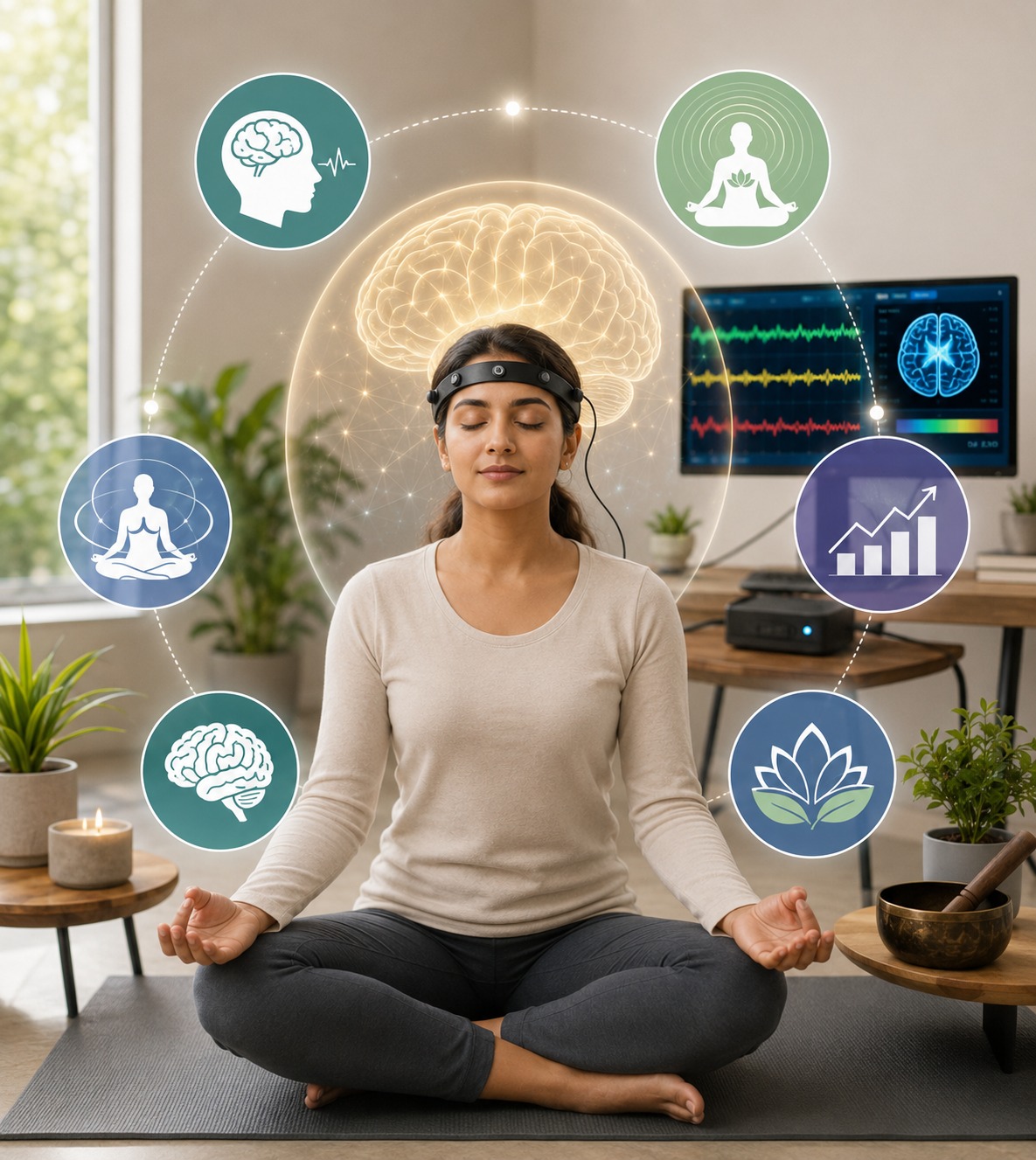
Mindfulness Practices with Neurofeedback: Incorporating mindfulness meditation techniques into neurofeedback sessions can help clients achieve a relaxed and focused state, enhancing the effectiveness of neurotherapy.
Stress Reduction: Mindfulness practices reduce stress, which can improve the outcomes of Neurotherapy by promoting a calmer and more receptive brain state.
BENEFITS:
Improved Functional Regulation: Combining mindfulness with neurotherapy can help clients better manage their emotions, leading to improved mental health.
Reduced Anxiety and Stress: Mindfulness practices can reduce anxiety and stress levels, which can positively impact neurotherapy results.
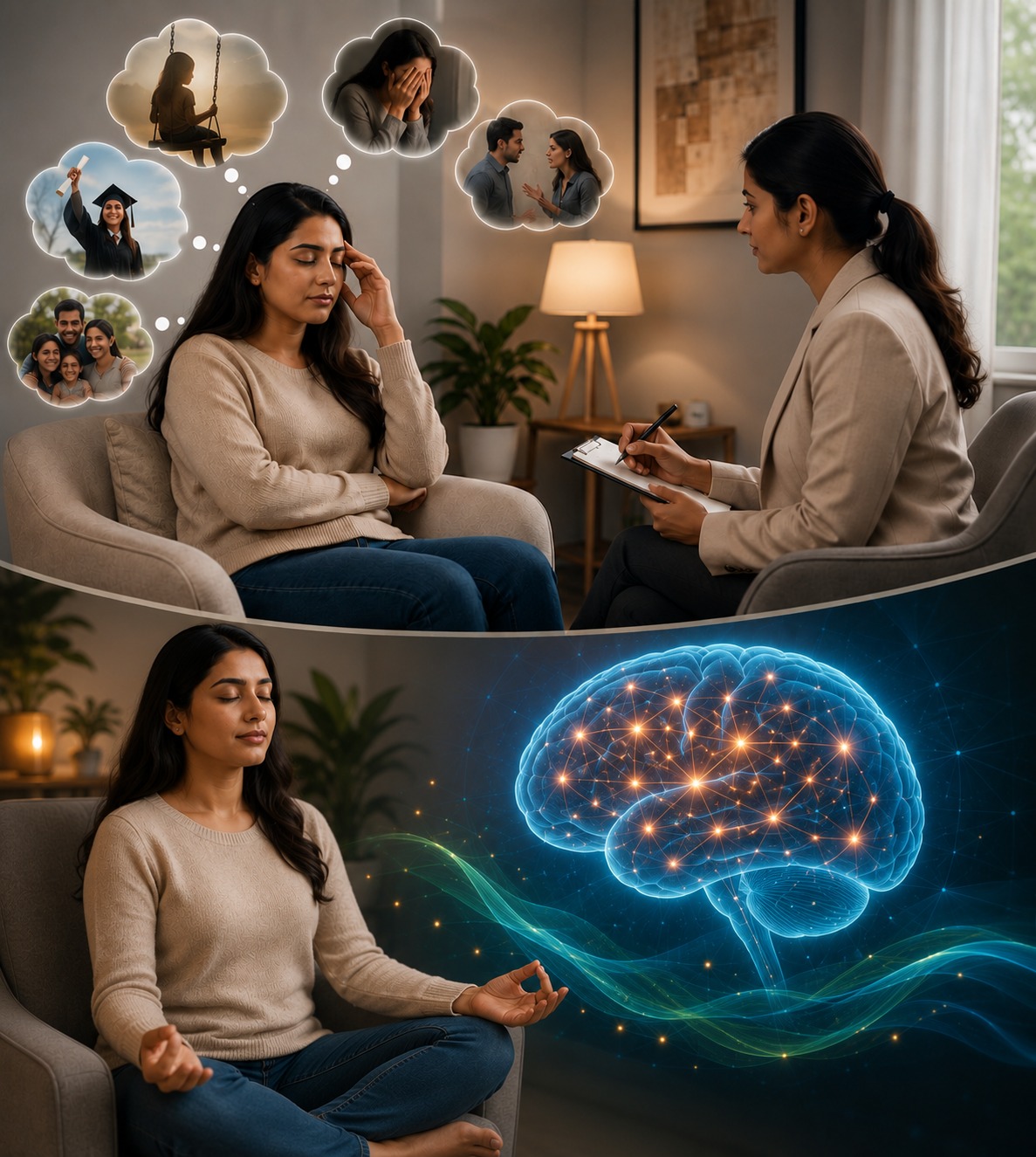
INTEGRATION STRATEGIES:
Exploring Unconscious Influences: Psychodynamic therapy helps clients uncover unconscious thoughts and early life experiences that can affect brain function. Neurotherapy can then target these underlying issues more effectively.
Emotional Insight and Neurotherapy: Graining insight into emotional conflicts through psychodynamic therapy can enhance client’s engagement and receptivity to neurofeedback sessions.
BENEFITS:
Deeper Understanding: Addressing both unconscious process and brain function provides a deeper understanding of client’s issues.
Long-Term Change: Combining psychodynamic therapy with neurotherapy can lead to more lasting changes in both psychological and neurological patterns.

INTEGRATION STRATEGIES:
Client Centered Approach: Humanistic therapy’s emphasis on empathy and self actualization can create a supportive environment for neurotherapy, enhancing client motivation and engagement.
Holistic Growth: Fostering personal growth and self-empowerment in humanistic therapy aligns well neurotherapy;s goals of improving overall brain health.
BENEFITS:
Enhanced Client Engagement: The supportive and empowerment nature of humanistic therapy can increase client’s willingness to participate in neurotherapy.
Comprehensive Personal Development: Combining humanistic therapy with neurotherapy supports both psychological and neurological growth.

INTEGRATION STRATEGIES:
Family and Social Dynamics:Systems theory can address family and social dynamics that impacts the client, creating a supportive environment for neurotherapy.
Community Support: Engaging with community and social systems provides additional support, enhancing the overall treatment process.
BENEFITS:
Improved Family Dynamics: Addressing family relationships can create a more supportive home environment, making Neurotherapy more effective.
Holistic Care: Considering the client’s broader social system ensures a comprehensive approach to treatment.
INTEGRATION STRATEGIES:
Family and Social Dynamics:Systems theory can address family and social dynamics that impacts the client, creating a supportive environment for neurotherapy.
Community Support: Engaging with community and social systems provides additional support, enhancing the overall treatment process.
BENEFITS:
Improved Family Dynamics: Addressing family relationships can create a more supportive home environment, making Neurotherapy more effective.
Holistic Care: Considering the client’s broader social system ensures a comprehensive approach to treatment.
INTEGRATION STRATEGIES:
Tailored Inventions: Integrative therapy combines elements from various therapeutic models to create personalized treatment plans that complement neurotherapy.
Flexibility: The flexibility of integrative therapy ensures that the most effective psychological approaches are used in conjunction with neurotherapy for each individual client,
BENEFITS:
Customized Care: Tailoring interventions to individual needs provides a more effective treatment approach.
Holistic Treatment: Combining multiple therapeutic models with neurotherapy addresses a wide range of psychological and neurological issues.
1. Cogniitve Behavioral Therapy(CBT) and Neurotherapy
INTEGRATION STRATEGIES
Cognitive Restructuring and Neurofeedback
Cognitive restructuring techniques in CBT are used alongside neurofeedback to help clients identify and change negative thought patterns while simultaneously training their brain to achieve healthier neurological patterns.
Behavioral Activation
Encouraging clients to engage in positive activities can enhance neuroplasticity, making neurotherapy more effective.
BENEFITS
Enhanced Brain Function
Combining CBT with neurotherapy can improve cognitive functions such as attention, memory and executive function.
Comprehensive Treatment
Addressing both cognitive and neurological aspects of disorders such as anxiety, depression and PTSD provides a ore holistic treatment approach.
2. Mindfulness-Based Cognitive Therapy(MBCT) and Neurotherapy
INTEGRATION STRATEGIES
Mindfulness Practices with Neurofeedback
Incorporating mindfulness meditation techniques into neurofeedback sessions can help clients achieve a relaxed and focused state, enhancing the effectiveness of neurotherapy.
Stress Reduction
Mindfulness practices reduce stress, which can improve the outcomes of Neurotherapy by promoting a calmer and more receptive brain state.
BENEFITS
Improved Functional Regulation
Combining mindfulness with neurotherapy can help clients better manage their emotions, leading to improved mental health.
Reduced Anxiety and Stress
Mindfulness practices can reduce anxiety and stress levels, which can positively impact neurotherapy results.
3. Psychodynamic Practice and Neurotherapy
INTEGRATION STRATEGIES
Exploring Unconscious Influences
Psychodynamic therapy helps clients uncover unconscious thoughts and early life experiences that can affect brain function. Neurotherapy can then target these underlying issues more effectively.
Emotional Insight and Neurotherapy
Graining insight into emotional conflicts through psychodynamic therapy can enhance client’s engagement and receptivity to neurofeedback sessions.
BENEFITS
Deeper Understanding
Addressing both unconscious process and brain function provides a deeper understanding of client’s issues.
Long-Term Change
Combining psychodynamic therapy with neurotherapy can lead to more lasting changes in both psychological and neurological patterns.
4. Humanistic Approach and Neurotherapy
INTEGRATION STRATEGIES
Client Centered Approach
Humanistic therapy’s emphasis on empathy and self actualization can create a supportive environment for neurotherapy, enhancing client motivation and engagement.
Holistic Growth
Fostering personal growth and self-empowerment in humanistic therapy aligns well neurotherapy;s goals of improving overall brain health.
BENEFITS
Enhanced Client Engagement
The supportive and empowerment nature of humanistic therapy can increase client’s willingness to participate in neurotherapy.
Comprehensive Personal Development
Combining humanistic therapy with neurotherapy supports both psychological and neurological growth.
5. Social Setups and Neurotherapy
INTEGRATION STRATEGIES
Family and Social Dynamics
Systems theory can address family and social dynamics that impacts the client, creating a supportive environment for neurotherapy.
Community Support
Engaging with community and social systems provides additional support, enhancing the overall treatment process.
BENEFITS
Improved Family Dynamics
Addressing family relationships can create a more supportive home environment, making Neurotherapy more effective.
Holistic Care
Considering the client’s broader social system ensures a comprehensive approach to treatment.

6. Social Setups and Neurotherapy
INTEGRATION STRATEGIES
Family and Social Dynamics
Systems theory can address family and social dynamics that impacts the client, creating a supportive environment for neurotherapy.
Community Support
Engaging with community and social systems provides additional support, enhancing the overall treatment process.
BENEFITS
Improved Family Dynamics
Addressing family relationships can create a more supportive home environment, making Neurotherapy more effective.
Holistic Care
Considering the client’s broader social system ensures a comprehensive approach to treatment.
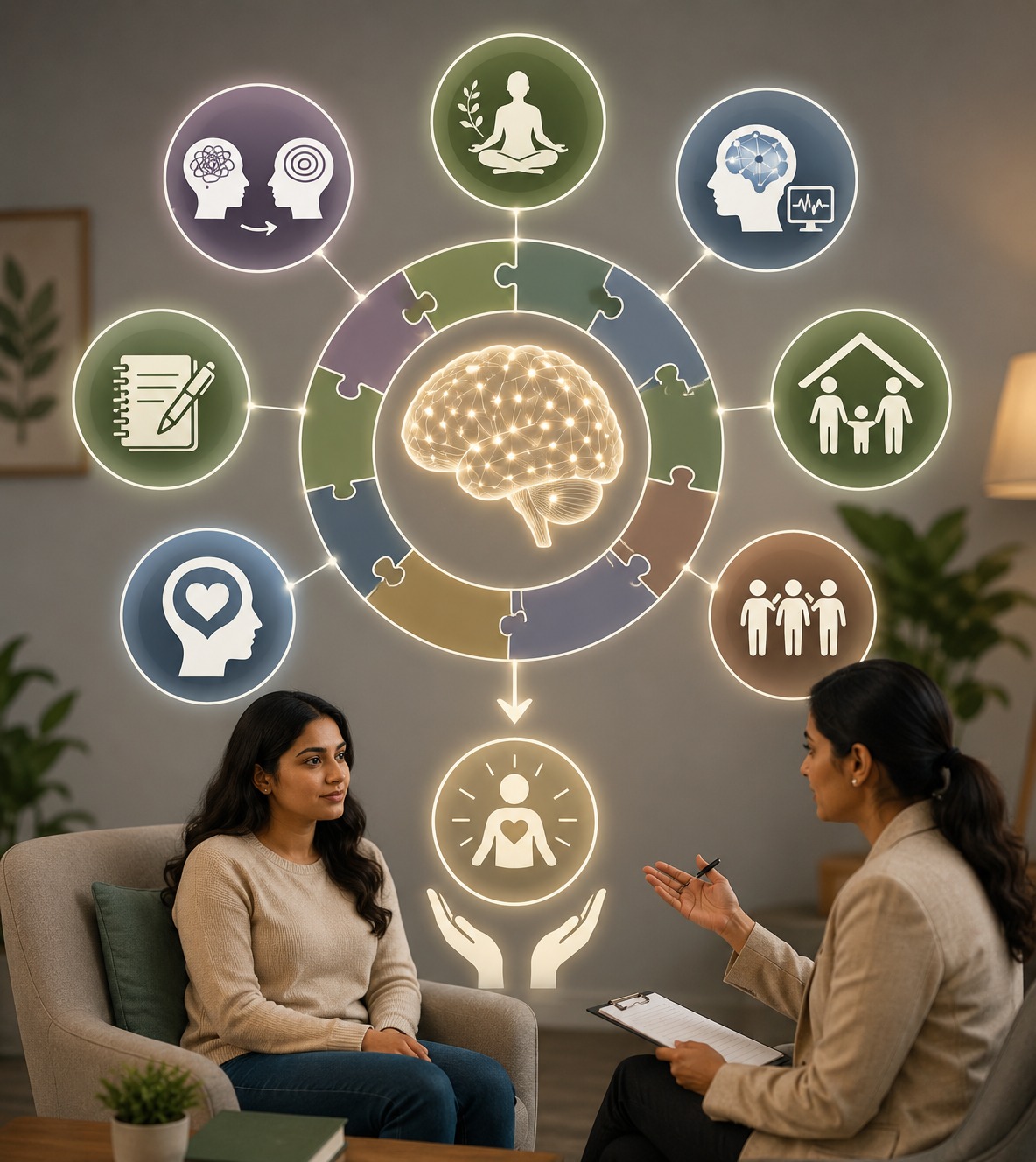
7. Integrative Framework and Neurotherapy and Neurotherapy
INTEGRATION STRATEGIES
Tailored Inventions
Integrative therapy combines elements from various therapeutic models to create personalized treatment plans that complement neurotherapy.
Flexibility
The flexibility of integrative therapy ensures that the most effective psychological approaches are used in conjunction with neurotherapy for each individual client.
BENEFITS
Customized Care
Tailoring interventions to individual needs provides a more effective treatment approach.
Holistic Treatment
Combining multiple therapeutic models with neurotherapy addresses a wide range of psychological and neurological issues.
Conclusion
At Neuro Vedic Holistic Healthcare, we believe in the power of integrating psychological counselling models with neurotherapy to provide comprehensive and culturally sensitive mental health care. By combining the strengths of various therapeutic approaches, we offer customized treatment plans that respect your cultural background and enhance the effectiveness of neurotherapy.
