Sleep Disorders & Insomnia: Natural Holistic
Support Through Neurotherapy, Yogic Science &
Lifestyle Healing
Holistic Healing at Neuro Vedic
Lying awake at 3 AM, watching the clock tick, dreading the exhaustion that tomorrow will bring — insomnia and sleep disorders are silently affecting millions of people. Poor sleep doesn’t just cause tiredness; it impairs cognitive function, weakens immunity, disrupts hormones, elevates stress, and raises the risk of chronic disease.
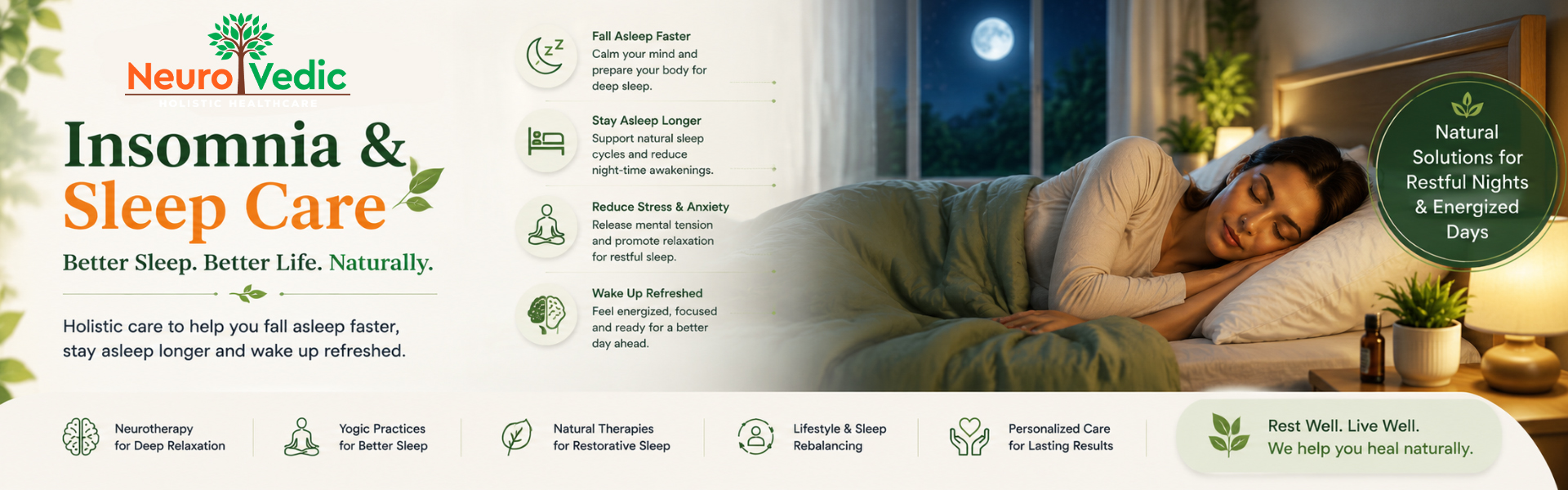
At Neuro Vedic Holistic Health Care, we approach sleep disorders through a holistic lens — addressing the nervous system, stress patterns, nutrition, and sleep hygiene through Neurotherapy, Yogic Science, Diet Guidance, and Lifestyle Modification to help patients restore natural, restful sleep.
Can This Condition Improve Naturally?
The body is designed to sleep. When sleep is disrupted, it’s often a sign that the nervous system is
overstimulated, stress hormones are elevated, or the body’s natural sleep rhythms have been disrupted.
Holistic care focuses on calming the nervous system, reducing cortisol, improving melatonin production
naturally, and creating the right physical and mental conditions for deep, restorative sleep.
Understanding This Condition
Sleep disorders encompass a range of conditions that affect the ability to sleep well regularly. The most
common is insomnia — difficulty falling asleep, staying asleep, or waking too early. Others include sleep
apnea, restless leg syndrome, narcolepsy, and circadian rhythm disorders. Insomnia affects approximately
10-30% of adults globally. Chronic sleep deprivation has significant effects on physical and mental health,
including immune function, metabolism, mood, and cardiovascular health.
Nutritional deficiencies: Magnesium, B vitamins, Melatonin precursors
Sedentary lifestyle
Overthinking and hyperactive mind
Modern Medical Treatment Approaches
Medical treatment for insomnia includes sleep medications (benzodiazepines, z-drugs, melatonin supplements) and Cognitive Behavioral Therapy for Insomnia (CBT-I), which is the most evidence-based long-term treatment. Sleep studies (polysomnography) may be recommended for conditions like sleep apnea. Addressing underlying causes — anxiety, pain, or depression — is essential for lasting improvement.
Understanding Long-Term Medication Considerations
Sleep medications carry risk of dependency and rebound insomnia
Morning grogginess and reduced daytime alertness
Memory impairment with long-term sedative use
Increased fall risk in elderly patients
Withdrawal effects when stopping sleep medications
How Neurotherapy May Support This Condition
Neurotherapy at Neuro Vedic works by stimulating specific body points that may activate the
parasympathetic nervous system — the body’s ‘rest and digest’ mode. This may help: reduce cortisol and
stress hormone levels, calm an overactive mind, relax muscle tension, improve melatonin production
naturally, and establish more consistent sleep rhythms. Many patients report deeper, more restful sleep
after regular Neurotherapy support.
Role of Yogic Science
Yoga Nidra — the most powerful sleep-inducing yoga practice
Legs-up-the-wall pose (Viparita Karani) for calming
Child's pose for nervous system rest
4-7-8 breathing for sleep onset
Bhramari pranayama to quiet the mind
Shavasana with guided body scan
Evening gentle yoga routine to signal sleep time
Diet & Nutrition Support
Magnesium-rich foods: pumpkin seeds, dark leafy greens, almonds
Vitamin B6 and B12 for melatonin production support
Lifestyle Modifications for Better Health
Maintain consistent sleep and wake times — even on weekends
Create a dark, cool, quiet sleep environment
Avoid screens 1 hour before bed
Establish a relaxing bedtime routine
Use the bedroom only for sleep — not work or entertainment
Morning sunlight exposure to reset circadian rhythm
Regular physical exercise — but not late evening
Journal worries before bed to empty the mind
Why Choose Neuro Vedic Holistic Health Care?
At Neuro Vedic Holistic Health Care, we follow an integrated wellness approach that combines Neurotherapy, Yogic Science, Diet & Nutrition Guidance, and Lifestyle Modification. Our focus is to support the body naturally and help individuals improve overall health through holistic care principles — addressing root causes rather than just suppressing symptoms
Most adults need 7-9 hours of quality sleep per night for optimal health. Individual needs may vary
slightly.
Q2. What causes chronic insomnia?
Chronic insomnia is most often driven by stress, anxiety, poor sleep habits, irregular schedules,
caffeine, and underlying mental or physical health conditions.
Q3. How does Neurotherapy improve sleep?
Neurotherapy may calm the nervous system, reduce cortisol levels, relax muscular tension, and support
natural melatonin production — all helping to restore restful sleep patterns.
Q4. What is the best natural remedy for insomnia?
A consistent sleep schedule, relaxing bedtime routine, magnesium-rich nutrition, Yoga Nidra, and
limiting caffeine and screens are among the most effective natural approaches.
Q5. Can yoga cure insomnia?
Yoga — especially Yoga Nidra and pranayama — is one of the most effective natural approaches for
improving sleep quality. It calms the nervous system and reduces the mental hyperactivity that disrupts
sleep.
Q6. When should I see a doctor about sleep problems?
If insomnia persists for more than 3 months, significantly impairs daily functioning, or is accompanied by
breathing issues during sleep, a medical evaluation is recommended.